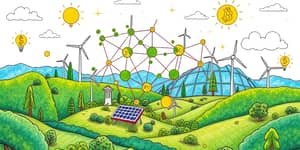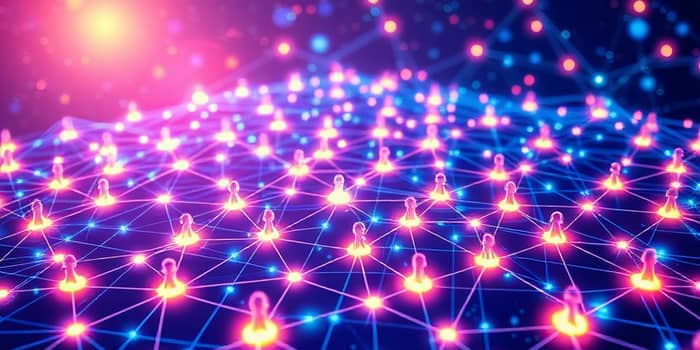
In a world dominated by platform silos and opaque algorithms, blockchain technology offers a radical reimagining of online social networks. By anchoring relationships and identities on decentralized ledgers, we can build digital communities where users truly own their connections and data.
Understanding Traditional Social Graphs
A social graph maps the relationships between people or entities in a network. In the Web2 era, these graphs live on centralized servers owned by corporations. Nodes represent users; edges signify friendships, follows, likes, comments, and more.
Centralized ownership leads to limited interoperability and lock-in. Moving to a new platform means rebuilding your network from scratch. Meanwhile, companies monetize your interactions through surveillance and targeted advertising, often obscuring the exact workings of their algorithms.
How Blockchain Transforms Social Connections
Shifting the social graph onto blockchain creates an open, shared protocol-level social layer. Instead of a single corporate backend, relationships, identities, and content references reside on public ledgers or decentralized storage networks.
This architectural change introduces four pivotal differences:
- Storage and Infrastructure Web2 uses private databases; Web3 relies on blockchain plus decentralized storage like IPFS.
- Ownership and Control In Web2, platforms dictate permissions. In Web3, users own and control their social data through wallets and on-chain identities.
- Portability Web2 graphs are trapped; Web3 graphs can be ported across any application supporting the protocol.
- Programmability and Composability Web3 graphs are open data, enabling developers to build DeFi, DAO, and reputation tools directly on social activity.
Key Benefits of Decentralized Social Graphs
Adopting a decentralized social graph brings tangible advantages for individuals, creators, and developers alike:
- Return data ownership to users by granting direct control over access and sharing preferences.
- Censorship resistance and resilience through distribution across many independent nodes, reducing single points of failure.
- Transparent on-chain revenue flows allow creators to monetize via subscriptions, fees, and NFTs without platform cuts.
- Customizable governance and moderation as communities elect rules via DAOs or choose clients with preferred policies.
These benefits collectively foster a healthy ecosystem where multiple clients compete on user experience while sharing the same underlying graph.
Comparing Web2 and Web3 Social Graphs
Technical Architecture: A Multi-Layered Stack
The decentralized social graph can be conceptualized as a stack of interdependent layers:
- Identity and Social Data Layer
- Indexing and Query Layer
- Storage and Bandwidth Layer
- Application and Client Layer
Each layer plays a critical role in ensuring the network remains open, efficient, and user-centric.
Protocols and Emerging Products
Several protocols and platforms are pioneering decentralized social graphs:
- Lens Protocol offers composable profiles, follows, and publications on Polygon.
- Subsocial builds on Kusama and Polkadot for on-chain posts and relationships.
- Farcaster provides a modular protocol for feeds and identity, with multiple clients already live.
These projects vary in approach but share the vision of an interoperable social layer where developers innovate on user-friendly frontends.
Trade-offs and Open Challenges
Despite compelling advantages, decentralized social graphs face hurdles:
Scalability and Performance: Blockchains can suffer congestion and high fees. Hybrid solutions place heavy content off-chain while anchoring proofs on-chain.
Privacy vs Transparency: By default, blockchain data is public. Balancing on-chain visibility with off-chain storage or zero-knowledge proofs is an active area of research.
User Experience: Seamless wallet management, gas-less interactions, and intuitive moderation remain critical to mainstream adoption.
Future Directions and Outlook
As decentralized social graphs mature, we can anticipate:
- Seamless identity portability enabling reputation scores to travel across platforms.
- Advanced governance models where users vote on protocol upgrades and content policies.
- Holistic DeFi integration unlocking social credits, reputation-based lending, and token-curated communities.
Innovations in privacy-preserving technologies, layer-2 scaling, and decentralized governance will shape the next generation of social networks.
Conclusion
The promise of a social graph on blockchain lies in returning power to users. By decentralizing data, embracing interoperability, and fostering transparent value flows, we can cultivate digital communities built on trust rather than surveillance.
This journey requires collaboration between protocol designers, front-end developers, and engaged communities. Yet, the vision is clear: a global mapping of relationships that belongs to everyone, not just a few gatekeepers.
As you explore and build in this space, remember that every interaction—every follow, post, or comment—can help weave a more open, resilient, and user-owned social fabric for the future.
References
- https://onchain.org/magazine/what-is-a-social-graph-in-web3-desoc/
- https://nebula-graph.io/posts/social-networks-with-graph-database-1
- https://matters-lab.io/blog/build-a-decentralized-social-graph-on-the-blockchain-with-meson-network
- https://hashtagweb3.com/web3-social-graph-explained
- https://www.juegostudio.com/blog/web3-social-graph
- https://builtin.com/blockchain/blockchain-applications
- https://thegraph.com/blog/grt-the-graph-decentralized-data/
- https://www.casper.network/get-started/24-top-enterprise-blockchain-applications
- https://www.youtube.com/watch?v=neU1ItLzyPE
- https://sopa.tulane.edu/blog/decentralized-social-networks
- https://www.projectliberty.io/news/social-graph-as-a-key-to-change/
- https://www.lightspark.com/glossary/graph