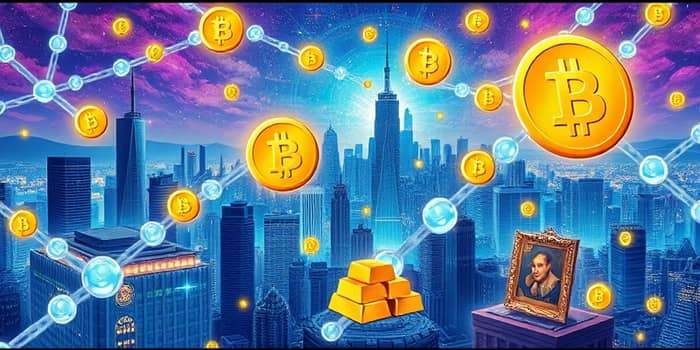
In an era where finance meets innovation, tokenizing tangible assets is reshaping investment landscapes.
Understanding Real-World Assets and Tokenization
Real-world assets (RWAs) represent both tangible and intangible items—from real estate and commodities to intellectual property—brought onto blockchain networks via a process called tokenization. By converting ownership rights into digital tokens, this model enables new forms of investment.
At the heart of this transformation lies asset tokenization on blockchain, which creates digital representations of physical items. Through this mechanism, investors gain exposure to high-value assets in novel, fractional forms.
Historically, many valuable assets remained illiquid due to high entry costs. Tokenization, however, fosters fractional ownership democratizes access, allowing individuals to buy small shares of a skyscraper or a parcel of farmland alongside institutional players.
Unleashing Liquidity and Accessibility
One of the most compelling advantages of RWA tokenization is the dramatic increase in liquidity. Illiquid markets, such as private real estate or fine art, can now be traded around the clock on blockchain-based platforms.
Token holders enjoy transparent on-chain ownership records, ensuring every transaction is visible and verifiable. This clarity reduces friction and disputes, enhancing trust among participants.
Furthermore, tokenization delivers an unprecedented level of liquidity, allowing assets to be bought, sold, or exchanged in fractions, often with settlement times measured in minutes instead of days.
Market Growth and Future Outlook
The RWA market has seen exponential growth, with early 2026 valuations ranging between $19 and $36 billion, driven by U.S. Treasuries, private credit, gold, real estate, and funds. Ethereum maintains roughly 65% of this market share.
By the end of 2026, total value locked (TVL) in tokenized assets is expected to surpass $100 billion. Long-term forecasts by leading analysts place potential market size in the hundreds of trillions, representing one of the largest opportunities in blockchain.
Driving Forces and Industry Catalysts
Several factors fuel the rapid expansion of RWA tokenization:
- Institutional Adoption: Major banks and asset managers, including BlackRock, KKR, and State Street, are developing tokenization products.
- Regulatory Support: Sandboxes and evolving frameworks worldwide are creating favorable conditions for compliant token offerings.
- Technological Advances: Improvements in smart contracts and DeFi integration streamline programmable settlements and innovative financial products.
These catalysts demonstrate how institutional adoption propels expansion, moving the industry from theoretical pilots to live, globally traded markets.
Asset Classes in the RWA Ecosystem
Tokenization applies to a broad spectrum of assets. Leading classes include:
- Real Estate: Residential and commercial properties converted into digital shares.
- Commodities: Gold, oil, and agricultural goods represented by tokens.
- Financial Instruments: Bonds, equities, and private credit structured as digital securities.
- Intellectual Property: Patents, trademarks, and royalties fractionalized for investors.
Navigating Challenges and Embracing Opportunities
Despite its promise, RWA tokenization faces hurdles. Regulatory clarity varies by jurisdiction, creating uncertainty for issuers and investors. Additionally, ensuring robust technical infrastructure requirements is critical to safeguard assets and transactions.
Operational complexities also arise: verifying who holds the underlying asset, defining legal rights of token holders, and establishing reliable redemption processes. Addressing these issues demands close collaboration between traditional finance experts and blockchain technologists.
Practical Steps for Investors and Institutions
To harness the potential of RWAs, market participants can follow these guidelines:
- Conduct thorough due diligence on tokenization platforms and custodial partners.
- Evaluate asset selection carefully, considering liquidity, volatility, and legal frameworks.
- Engage with regulatory bodies or experienced advisors to ensure compliance and risk management.
- Monitor technological developments in smart contracts and interoperability standards.
By applying due diligence and careful evaluation, investors can navigate emerging markets with confidence and seize new opportunities.
Conclusion: Charting the Path Forward
The tokenization of real-world assets is not merely a technological novelty—it represents a fundamental shift in how value is created, stored, and exchanged. By bridging the physical and digital worlds, RWAs offer transformational potential for global finance, unlocking liquidity, transparency, and accessibility at unprecedented scale.
As the market matures and regulatory frameworks solidify, both individual and institutional investors stand at the threshold of a new era. Embracing tokenized assets today can pave the way for diversified portfolios, efficient markets, and broad participation across economic segments.
Ultimately, real-world asset tokenization is more than a financial innovation—it’s a bridge to an inclusive, dynamic future, where anyone, anywhere, can own a piece of the world’s most valuable assets.
References
- https://www.ledger.com/academy/glossary/real-world-assets-rwa
- https://www.einpresswire.com/article/895411951/the-tokenized-real-world-assets-rwas-market-is-projected-to-grow-to-3016-29-billion-by-2030
- https://www.sofi.com/learn/content/what-are-real-world-assets-rwas/
- https://www.kucoin.com/blog/en-real-world-assets-rwa-crypto-growth-2026-tokenization-trends-market-size-trading-insights
- https://www.coinbase.com/learn/crypto-glossary/what-are-real-world-assets-rwa
- https://www.bdo.com/insights/industries/fintech/trends-in-tokenization-reimagining-real-world-assets
- https://chain.link/education-hub/real-world-assets-rwas-explained
- https://a16zcrypto.com/posts/article/trends-stablecoins-rwa-tokenization-payments-finance/
- https://www.moonpay.com/learn/cryptocurrency/rwas
- https://beincrypto.com/learn/real-world-asset-tokenization/
- https://www.stonex.com/en/financial-glossary/real-world-assets/
- https://chainwire.org/2026/02/03/why-2026-marks-the-pivot-for-real-world-asset-tokenization-from-experimental-pilots-to-active-global-markets/
- https://federal-lawyer.com/an-introduction-to-real-world-assets-rwa/
- https://polymesh.network/real-world-assets
- https://www.rebank.cc/real-world-assets-the-practitioners-guide/