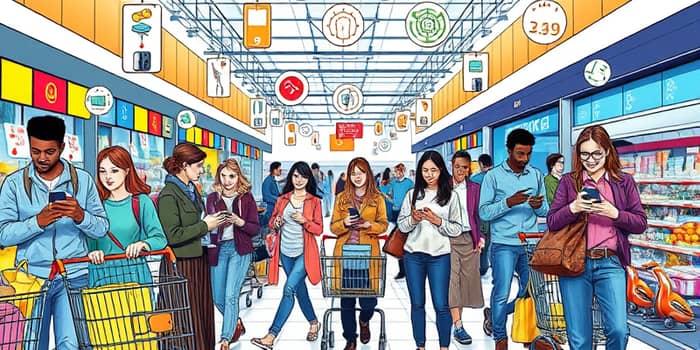
In an era defined by inflationary pressures and rapidly evolving retail technology, shoppers must adopt innovative approaches to stretch their budgets. By blending traditional tactics like bulk buying with cutting-edge mobile tools and AI personalization, consumers can transform their everyday purchases into smart, cost-effective experiences. This comprehensive guide unveils actionable strategies backed by 2026 data to help you save on groceries, household goods, clothing, electronics, and daily essentials.
Embracing a Value-First Mindset
With 86% of holiday shoppers feeling inflation’s impact in 2025 and 69% actively seeking deals, adopting a value-first mentality has never been more critical. Around 28% of consumers trade down to discount retailers, 23% consolidate spending at warehouse clubs, and 19% opt for store brands.
By using well-honed disciplined trading strategies, you can cut your routine grocery and household expenses by up to 30%. Start by analyzing your monthly purchases, then shift nonperishable staples—like paper goods and canned foods—to bulk formats. Replace premium items with high-quality generics, and leverage apps that provide powerful real-time price tracking to ensure you’re getting the lowest available rates before checkout.
Key Statistics at a Glance
Leveraging Online and Mobile Innovations
Online shopping growth accelerated in 2026, with 2.86 billion global users and mobile eCommerce approaching $5 trillion in annual sales. Seizing these advantages means more than simply adding items to a digital cart; it requires strategic use of tools and channels to uncover savings.
- Use price-comparison apps to scan barcodes or input SKUs for instant rate checks.
- Activate voice assistants for hands-free bargain hunting—40% of U.S. users already do so.
- Engage chatbots on retail websites to request promo codes or flash-deal alerts; 44% of shoppers prefer chat-based queries.
By integrating these features, you access AI-powered personalized shopping recommendations and guard against impulse purchases, ultimately boosting your bottom-line savings.
Navigating Hybrid In-Store and Digital Journeys
BOPIS (Buy Online, Pickup In Store) sales in the U.S. surpassed $131 billion in 2026, growing 10% annually. Blending digital research with in-person pickup eliminates shipping fees and preserves tactile inspection benefits.
Before heading to the store, use your retailer’s app to reserve items at local inventory levels. Scan on-site QR codes in “Stores of the Future” to unlock exclusive markdowns, often invisible to window shoppers. With each order, you can save $5–$10 on shipping and delivery costs, and capitalize on instant clearance offers when items are returned to the shelf.
Harnessing Social Media and Influencer Insights
Social commerce continues its upward trajectory; 32% of consumers now research purchases on platforms like TikTok and Instagram, and 77% end up buying from brands they follow. Gen Z, representing 40% of global consumer spending, demands authenticity and real-time peer reviews.
- Follow deal-focused influencers who share exclusive codes or flash-sale alerts.
- Use sentiment-analysis features on free apps to gauge price trends before committing.
- Join brand-loyalty communities on social channels to receive early access to limited-time offers.
When you rely on contextual cross-device deal notifications, you build a dynamic feed of savings opportunities throughout your scrolling sessions.
AI-Powered Personalization for Savings
Leading retailers now treat AI as their eCommerce “operating system,” offering hyper-personalized deals based on browsing history, purchase frequency, and even time-of-day patterns. With 92% of major merchants investing in store-ops technology, consumers can tap into data-driven discounts without lifting more than a fingertip.
Opt into AI-driven email or SMS campaigns to receive customized retention offers, such as subscription downgrades or usage-based loyalty tiers. Leverage chatbots to unlock instant promo codes at checkout, and enable voice-search features on your smart speaker to ask for the “best deal today.” These tactics deliver bulk-buying power at warehouse clubs and niche outlets alike, ensuring maximum value every time you click “confirm.”
Ambient and Continuous Shopping Experiences
Today’s consumers often shop while streaming, commuting, or multitasking—70% engage in ambient purchasing. Retailers respond by delivering contextual offers across devices and platforms.
To capture these savings, enable push notifications on your retail and deal-aggregation apps. Schedule quiet-hour discounts for late-night browsing when fewer shoppers compete for the same deals. By unifying your shopper profile across mobile, tablet, and desktop, you eliminate duplicate promotions and surface the most relevant coupons exactly when you need them.
Subscription Optimization for Gen Z and Beyond
With subscriptions dominating Gen Z lifestyles, auditing your recurring services becomes a powerful lever for savings. AI tools can predict upcoming churn risks and prompt you with retention offers—often at lower rates than newcomer discounts.
- Review your subscriptions quarterly, downgrading plans you underuse.
- Swap branded services for no-frills or generic alternatives where quality loss is minimal.
- Negotiate with providers for bundled deals, leveraging automated chatbots to secure loyalty bonuses.
By harnessing strategic subscription management techniques, you free up budget for occasional splurges without derailing your financial goals.
Timing Purchases with Supply Chain Efficiencies
Retailers leverage AI-driven analytics to optimize inventory, leading to periodic price rebalancing and clearance events. Walmart’s advanced pricing engines and QR-enabled “smart shelves” are prime examples.
Watch for post-rebalancing sales, often scheduled in the middle of fiscal quarters when retailers recalibrate stock levels. Avoid the extended holiday shopping windows, as prices can stay elevated due to sustained demand. Instead, target midweek and off-peak periods when digital price tags automatically dip to clear surplus inventory.
By combining these strategies—value-first trading, digital tools, hybrid journeys, social insights, AI personalization, ambient offers, subscription audits, and timed purchases—you can achieve significant savings on your everyday essentials. Smart shopping is no longer a luxury; it’s a necessity for thriving in 2026’s dynamic retail landscape.
References
- https://porchgroupmedia.com/blog/consumer-shopping-trends/
- https://www.biobrain.io/blog/retail-outlook-2026-the-new-rules-of-u-s-shopping
- https://www.fastsimon.com/ecommerce-wiki/optimized-ecommerce-experience/fascinating-online-shopping-statistics/
- https://www.retailtouchpoints.com/features/executive-viewpoints/smart-stores-arent-enough-2026-will-be-defined-by-smarter-operations
- https://nrf.com/blog/10-trends-and-predictions-for-retail-in-2026
- https://wslstrategicretail.com/blog/wsl-looks-ahead-7-trends-for-2026/
- https://newsroom.breadfinancial.com/holiday-shopping-lookback-2026
- https://www.deloitte.com/us/en/insights/industry/retail-distribution/retail-distribution-industry-outlook.html
- https://www.smurfitwestrock.com/blog/top-retail-trends-of-2026-what-to-expect