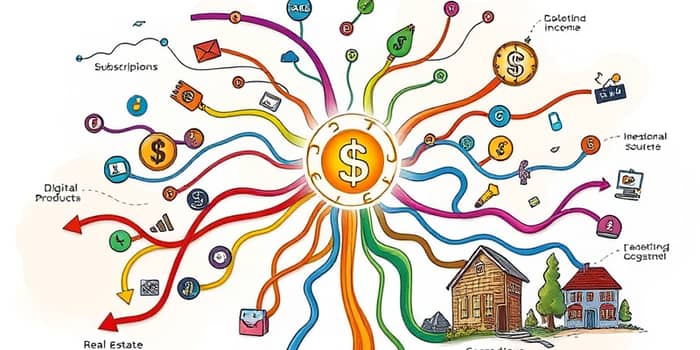
In today’s dynamic business landscape, understanding exactly when and how to record income is crucial for sustainable growth. Revenue recognition is more than a compliance exercise—it’s a strategic tool that drives financial clarity and empowers better decision-making.
Whether you’re a freelancer, a startup founder, or the CFO of an established corporation, mastering revenue recognition principles ensures you present a reliable view of your company’s performance.
What is Revenue Recognition?
The cornerstone of accrual accounting, revenue recognition defines the precise moment when revenue is earned. Unlike cash-based accounting, which logs transactions only upon receipt of payment, this principle matches income with the delivery of value.
For example, if you receive an upfront fee for a year-long software subscription, you recognize that revenue across twelve months, reflecting ongoing service delivery rather than a single cash event.
For creative entrepreneurs, recognizing revenue from royalties or license agreements demands tracking usage metrics. Aligning recognition to actual consumption or distribution ensures your records match real-world outcomes.
Key Regulatory Frameworks
To standardize revenue reporting across industries and regions, regulators have established robust guidelines:
- ASC 606 (U.S. GAAP) – Emphasizes detailed disclosures and five-step recognition model.
- IFRS 15 (International) – Focuses on transparent presentation of revenue from contracts.
Both standards align on the core objective: ensuring users of financial statements receive consistent and comparable information.
The Five-Step Model Explained
Under both ASC 606 and IFRS 15, companies apply a uniform five-step process to report revenue:
- Identify the contract with a customer
- Identify each performance obligation
- Determine the transaction price
- Allocate the price to performance obligations
- Recognize revenue when each obligation is satisfied
This framework guarantees that every contractual promise is matched with its appropriate revenue recognition pattern, delivering clear financial insights for stakeholders.
Traditional Elements vs. Modern Approach
While these elements laid the foundation for early revenue recognition, the modern five-step model provides greater depth, accommodating complex contracts and performance obligations.
Types of Income Streams
An organization’s revenue can be categorized by how it is generated:
- Active Income: Direct earnings from employment or service delivery, such as salaries, consulting fees, and project-based work.
- Passive Income: Earnings that require minimal ongoing effort. Key categories include
Recurring streams like subscriptions provide predictable cash flow, while usage fees align revenue to consumption. Project revenue suits bespoke engagements, and licensing fees formalize intellectual property monetization.
Diversifying Your Revenue Streams
Focus on building a balanced portfolio of income sources. By combining active work with passive avenues, you create a more resilient financial structure that can weather market volatility.
Start by identifying your core skills or assets. Could you transform expertise into digital products? Do you have capacity to invest in real estate or portfolios? Each option brings unique benefits and challenges.
Setting measurable goals for each stream and tracking performance regularly ensures you can reallocate resources to high-growth areas and pause underperformers. Incorporate quarterly performance reviews to stay agile.
Why Revenue Recognition Matters
Accurate revenue recognition is vital for several reasons:
- Ensuring true business performance is reflected in financial statements.
- Maintaining regulatory compliance with ASC 606 and IFRS 15 standards.
- Enhancing transparency to build trust with investors and stakeholders.
- Enabling informed decision-making by providing a reliable view of income drivers.
Implementing Best Practices
Adopt these strategies to streamline your revenue recognition process:
- Conduct regular contract reviews to identify performance obligations and pricing terms.
- Use automated accounting tools that align with the five-step model, reducing manual errors.
- Collaborate with cross-functional teams—legal, sales, and finance—to ensure consistent data capture.
- Schedule periodic audits to validate recognition schedules and spot discrepancies early.
Invest in training finance teams on the nuances of ASC 606 and IFRS 15, and update internal policies to reflect the latest guidance. A well-informed team can anticipate changes and adapt processes swiftly.
Practical Tips for Freelancers and Small Businesses
Freelancers often deal with variable consideration, such as performance bonuses or retainers. Document client agreements clearly, specifying deliverables, payment milestones, and termination clauses. This clarity ensures that your revenue recognition aligns with actual service completion.
Small businesses leveraging subscriptions or service contracts should automate billing and recognition schedules. Platforms that integrate accounting and CRM systems can automatically trigger revenue entries when milestones are met, reducing administrative overhead and errors.
Conclusion
Mastering revenue recognition transforms it from a compliance hurdle into a strategic advantage. By understanding regulatory frameworks, applying the five-step model, and diversifying income streams, you can achieve a transparent and robust financial foundation.
Embrace these principles today to unlock actionable financial insights that drive sustainable success and empower confident decision-making.
References
- https://www.zuora.com/glossary/revenue-recognition/
- https://www.dowjanes.com/blog/types-of-income-streams
- https://dealhub.io/glossary/revenue-recognition/
- https://ca.indeed.com/career-advice/career-development/streams-of-revenue
- https://www.netsuite.com/portal/resource/articles/accounting/revenue-recognition.shtml
- https://www.murphy3.com/blog/7-different-types-of-income-streams-for-your-business/45092
- https://trullion.com/guides/revenue-recognition-a-complete-guide/
- https://www.navyfederal.org/makingcents/investing/15-passive-income-idea-to-generate-cash-flow.html
- https://en.wikipedia.org/wiki/Revenue_recognition
- https://www.uschamber.com/co/start/business-ideas/passive-income-business-ideas
- https://www.salesforce.com/sales/revenue-lifecycle-management/revenue-recognition-principle/
- https://www.youtube.com/watch?v=pBnRZ6cnwjo
- https://stripe.com/en-jp/guides/introduction-to-revenue-recognition
- https://www.bankrate.com/investing/passive-income-ideas/
- https://fasb.org/standards/implementing/revrec